Pilgrimage
Jageshwar Dham Travel Guide: Ancient Temples, Deodar Forests & Best Time to Visit
Hidden in a quiet valley near Almora, Jageshwar Dham brings together ancient stone temples, towering deodar forests and the gentle flow of the Jata Ganga. This guide covers what makes Jageshwar special, the temples and experiences worth slowing down for, how to reach, the best time to visit and practical travel advice.
Opening note
Jageshwar does not announce itself from a distance.
There is no dramatic moment when a huge temple suddenly appears against the mountains. Instead, the road gradually slips deeper into the forest. Pine gives way to tall deodar trees, the air becomes cooler, and somewhere below the road the Jata Ganga begins moving through the valley.
Then the stone temples appear.
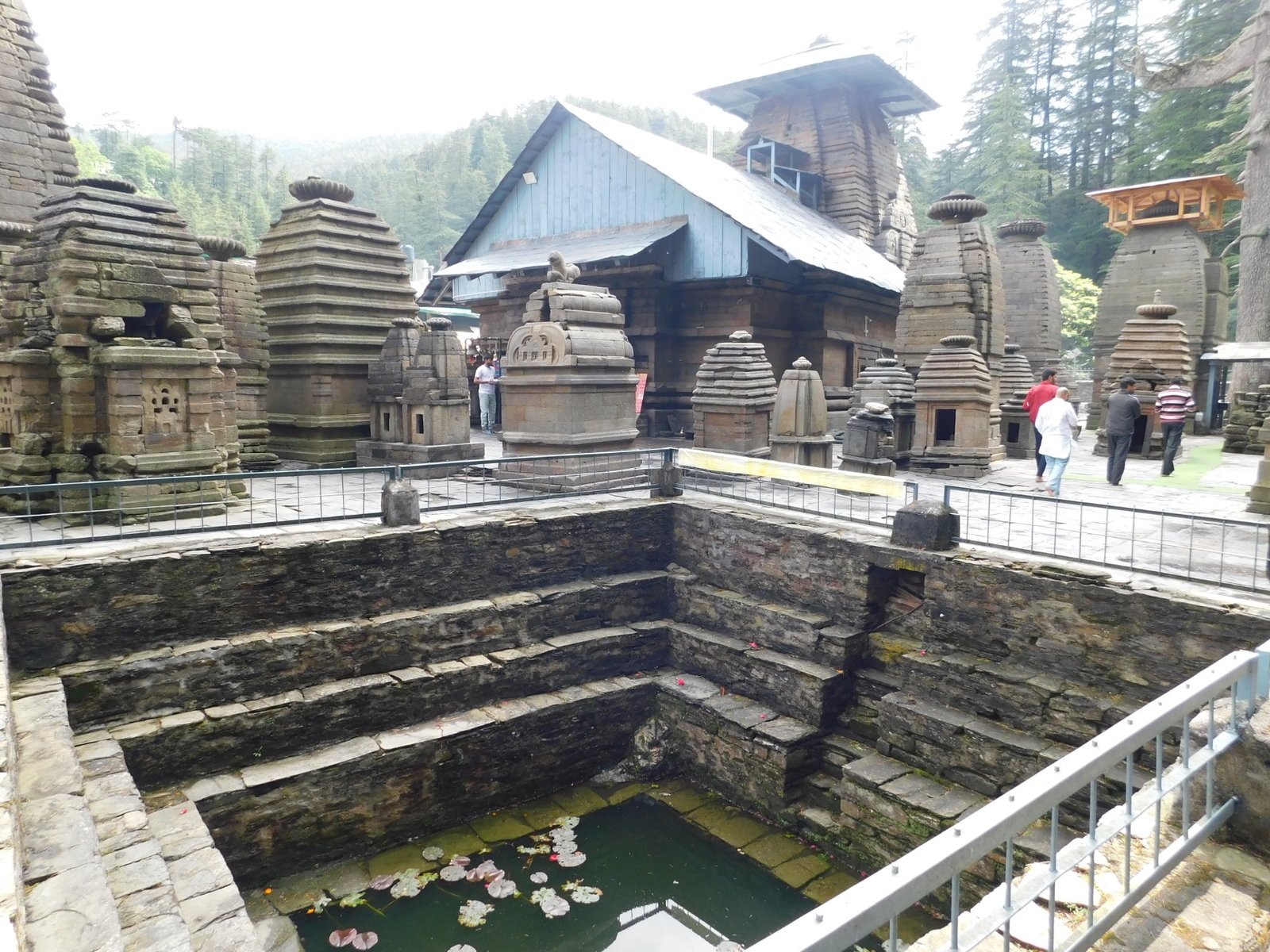
Not one temple, but a whole gathering of them—dark stone shikharas standing close together beneath trees that seem even older than the road leading here. Bells ring occasionally, smoke from incense drifts between the shrines, and the forest keeps most other sounds away.
That is perhaps the first thing to understand about Jageshwar.
You may come here because you have read about its ancient temples, its association with Lord Shiva or its archaeological importance. But once you arrive, the place is difficult to separate into religion, history and nature. The temples belong to the forest, the forest follows the stream, and the stream seems to carry the silence through the entire valley.
This Jageshwar Dham travel guide is meant to help you experience that whole landscape—not simply arrive, complete a darshan and leave.
Orientation
Know the place
Jageshwar Dham lies in the Almora district of Uttarakhand, roughly 35 kilometres from Almora town. Set in the Jata Ganga valley, the sacred landscape contains more than 120 stone temples dedicated largely to forms of Lord Shiva, surrounded by deodar, pine and rhododendron forests.
The temple group is protected as an important heritage site, and official tourism information places much of its architectural history in the post-Gupta and pre-medieval periods. The complex contains temples of different sizes as well as stone sculptures, carved doorways, lingams and inscriptions; several structures were also built or renovated under rulers of the Katyuri period.
Among the prominent shrines are Jageshwar Mahadev, also known as Tarun or Bal Jageshwar, and the Mahamrityunjaya Temple. Nearby are the Dandeshwar group, Vriddha Jageshwar and the Archaeological Museum, making Jageshwar less a single temple visit and more a sacred and historical landscape that deserves time on foot.
02 · Why it matters
More than a point on the map
There are ancient temples elsewhere in Uttarakhand, beautiful forests elsewhere in Kumaon and quieter mountain valleys further away from popular roads. Jageshwar is unusual because all three exist here almost without separating from one another.
Walk through the temple complex and the first thing you notice may be the architecture—the compact stone temples, weathered carvings and narrow spaces between one shrine and another. Look upward and the temples almost disappear beneath enormous deodar trunks.
That relationship changes the experience.
Jageshwar does not feel like an archaeological monument placed inside a tourist compound. Worship continues here. Bells still ring. Pilgrims arrive with flowers and offerings. Priests move between temples while visitors examine carvings that have survived centuries of Himalayan weather.
And only a few steps away, the forest begins again.
Official tourism material describes Jageshwar as both an important archaeological landscape and a place suited to contemplation and meditation. That combination is what gives it its character. You do not have to choose whether you came for faith, history or nature. Jageshwar allows all three journeys to happen together.
04 · Plan
Plan smart, travel easy
How to reach
By road
Jageshwar is connected by motorable road and lies roughly 35–36 km from Almora. For travellers approaching from the plains, Haldwani and Kathgodam are common gateways before continuing towards Almora and then Jageshwar. Mountain travel times can be considerably longer than the distance suggests, so avoid planning the final drive too late in the evening.
By train
Kathgodam is the nearest major railway station. Uttarakhand Tourism places it at roughly 125 km from Jageshwar. From Kathgodam, continue by taxi or road transport through the Kumaon hills towards Almora and Jageshwar.
By air
Pantnagar Airport is the nearest airport, approximately 150 km from Jageshwar according to Uttarakhand Tourism. The remainder of the journey is by road. Keep sufficient daylight for the mountain section and allow extra time for weather, traffic and road conditions.
Best time to visit
April to June
One of the most comfortable periods to visit Jageshwar. Days are generally suitable for walking between the temples and exploring the forest, while mornings and evenings remain pleasantly cool. This is a good period for travellers who want to combine temple visits, the archaeological museum and short walks around the valley.
July to August
The monsoon makes the deodar forest intensely green and gives Jageshwar a very different atmosphere. August is also associated with the Jageshwar Monsoon Festival and can draw larger numbers of visitors. Rain, slippery roads and monsoon-related disruptions are possible, so check local weather and road advisories before travelling.
September to November
This is one of the best periods for Jageshwar. The monsoon has largely withdrawn, the forest remains fresh and the cooler weather is comfortable for walking. Uttarakhand Tourism specifically recommends September to November as one of the principal visiting seasons.
December to March
Winter brings colder mornings and evenings and a much quieter atmosphere. Travel with proper warm clothing and check road and weather conditions before leaving, particularly during cold spells. Travellers who value silence over convenience may find winter especially rewarding, but should keep their plans flexible.
People & place
Food and local culture
Jageshwar belongs culturally to Kumaon, and the experience should not end when you leave the temple complex.
Food close to the shrine is generally simple, but if your journey includes Almora or surrounding Kumaoni settlements, look for regional dishes rather than limiting yourself to standard tourist food. Traditional preparations found in the district include Dubuk, while local sweets such as Singori, Jhangora ki Kheer and especially Almora's distinctive Bal Mithai are strongly associated with the region.
Singori is prepared from khoya and traditionally wrapped in a local leaf, while Bal Mithai is made from roasted khoya and covered with small sugar balls. These are not merely souvenirs sold to tourists; they are part of the food identity of Almora and Kumaon.
Culturally, remember that Jageshwar remains an active place of worship. The temples may be historically important, but they are not museum exhibits. Dress respectfully, keep conversations and music low around the shrines, follow local instructions and ask before photographing people, priests or rituals.
Before you leave
Plan with care
Useful notes
- Keep at least half a day for the main Jageshwar area; one or two nights are better if you also want to visit Vriddha Jageshwar and explore without rushing.
- Start early. Morning is generally quieter and gives you time to experience the temples before day visitors arrive.
- Wear comfortable walking shoes. Even though Jageshwar is road-accessible, the experience involves walking between temple groups, the forest and nearby sites.
- Carry an extra layer throughout most of the year. The forested valley can feel considerably cooler than exposed roads around Almora.
- Carry rain protection during the monsoon. Wet stone, forest paths and mountain roads can become slippery.
- Visit the Archaeological Museum if it is open. Uttarakhand Tourism currently lists the museum from 10:00 AM to 5:00 PM with Friday as the weekly closure, but confirm the current timing locally before planning your day around it.
- Keep some time for Dandeshwar rather than driving past it. It forms part of the wider sacred landscape and deserves more than a quick roadside photograph.
- If visiting Vriddha Jageshwar, allow separate walking time. The official tourism listing describes an approximately 1.5-km uphill approach.
- Expect greater crowds during major religious occasions. Shivratri and the Jageshwar Monsoon Festival are important periods for the destination.
- Support local businesses where practical. Tea shops, small eateries, guides and locally run accommodation allow more of the value of tourism to remain in the region.
Things to avoid
- Do not treat the temple complex as a photography set. Darshan, worship and local religious practices take priority over obtaining photographs.
- Do not touch, scratch, climb or lean equipment against ancient sculptures and temple structures. Jageshwar is an important protected archaeological landscape.
- Avoid loud music inside the temple and forest areas. Much of what makes Jageshwar special is precisely what cannot survive excessive noise.
- Do not leave plastic, food packaging or religious offerings in the forest or beside Jata Ganga. Carry your waste back to an appropriate disposal point.
- Do not light fires in the deodar forest.
- During the monsoon, do not assume that a short distance means a predictable journey. Heavy rain can affect visibility and mountain roads; check current weather and road conditions before travelling.
- Do not depend completely on published opening hours for temples or the museum. Religious schedules, festivals, maintenance and local circumstances can change access.
- Avoid trying to cover Jageshwar, Dandeshwar, Vriddha Jageshwar and several distant Almora attractions in a single rushed day. Jageshwar loses much of its character when treated purely as a checklist.
07 · Make it yours
Suggested itinerary
- Day 1 – Almora to Jageshwar, Dandeshwar and the main temple complex. Leave Almora in the morning and drive towards Jageshwar. Stop at Dandeshwar before or around your arrival rather than postponing it indefinitely. Check into your stay, then spend the late morning and afternoon exploring the main Jageshwar temple complex slowly. Visit Jageshwar Mahadev and Mahamrityunjaya Temple, walk beside Jata Ganga and spend time beneath the deodars. If the Archaeological Museum is open, visit it before closing. Stay in or around Jageshwar so that you do not have to rush back towards Almora.
- Day 2 – Quiet morning at Jageshwar and Vriddha Jageshwar. Return to the temple complex early, before the valley becomes busier. After breakfast, walk or travel towards Vriddha Jageshwar and spend time on the ridge before returning. Have a simple local meal, take one final slow walk through the forest and then continue towards Almora or your next Kumaon destination.
A final note
There are places where the monument is the reason to travel, and there are places where the landscape is the attraction.
Jageshwar is difficult to divide that way.
Remove the temples and the deodar valley would still be beautiful. Remove the forest and the stone shrines would still carry centuries of history. But together they create something neither could create alone.
Perhaps that is why the best memory of Jageshwar is often not a single temple.
It may be the sound of a bell somewhere behind you while you are walking beneath the trees.
It may be the coldness of old stone beneath your hand before you remember not to touch it.
It may be sunlight entering the valley in narrow pieces because the deodars are too tall to let all of it through.
Or it may simply be the moment when you realise that you have stopped checking the time.
Come to Jageshwar for the temples if that is what calls you here.
Stay long enough to notice the forest.
And leave without disturbing either.
No approved comments yet. Be the first to share your thoughts.