Trek
Valley of Flowers Trek Guide: Route, Best Time, Difficulty & Itinerary
The Valley of Flowers trek takes you from Govindghat into the high Himalayas through Pulna and Ghangaria before entering one of India’s most remarkable alpine landscapes. This guide covers the route, trek distance, difficulty, best flowering season, park rules and a practical itinerary.
Opening note
The Valley of Flowers trek has an unusual problem: photographs make it look easier than it is.
You see a wide green valley, thousands of flowers and a trail disappearing gently between the mountains. What those photographs usually leave out is the day before—the long walk to Ghangaria, the wet shoes, the climb beside the river and the fact that you have already travelled deep into the mountains before you even reach the national park gate.
Then the next morning you start again.
From Ghangaria, the trail enters the forest, crosses streams and gradually climbs away from the settlement. For a while there is no grand reveal. You walk through trees, over wet stone and past waterfalls while wondering exactly where the famous valley begins.
And then the landscape opens.
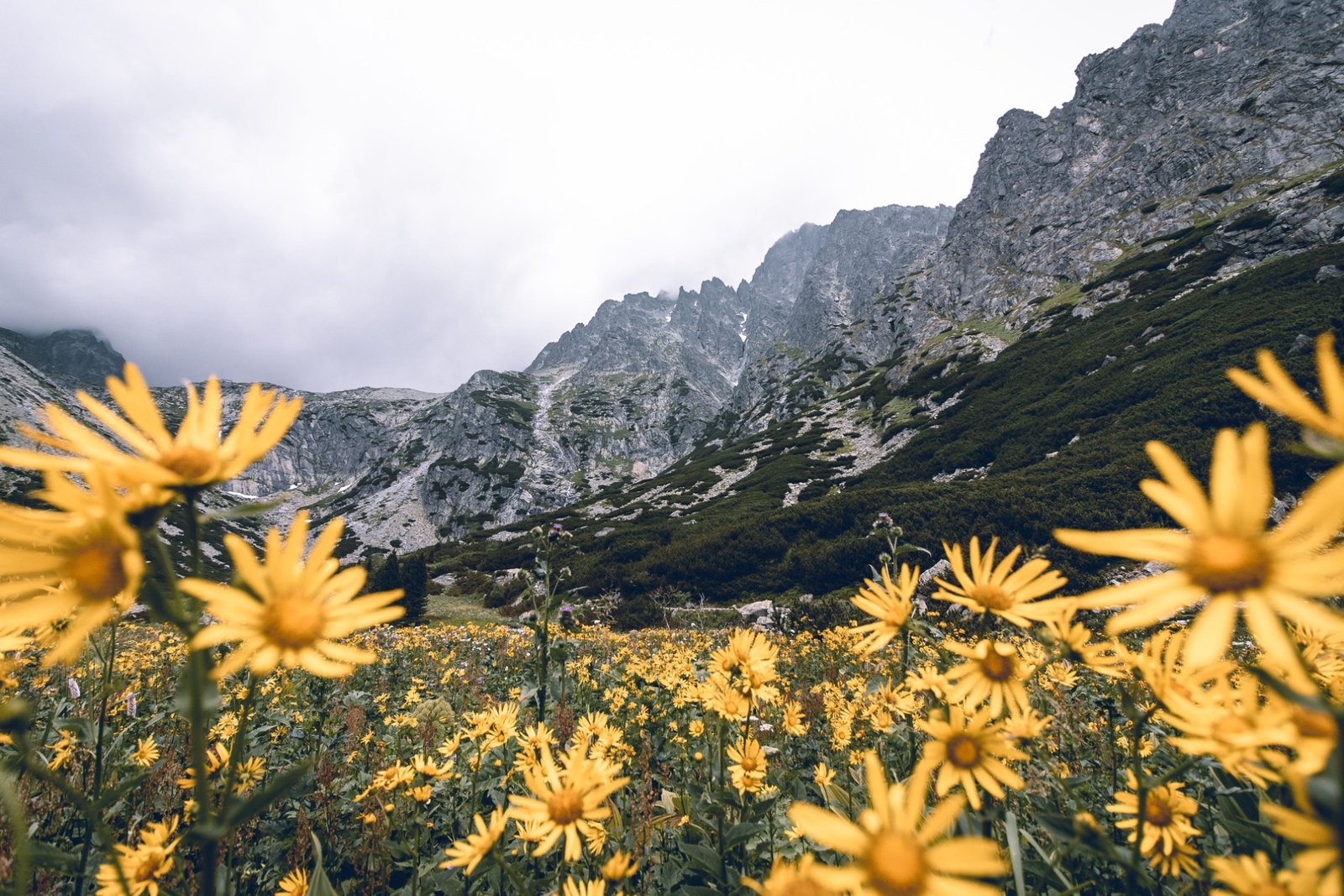
The mountains move further apart. Grass replaces forest. Small patches of flowers begin appearing beside the trail, followed by larger stretches scattered across the slopes.
It is worth arriving without expecting the valley to look exactly like the photograph that brought you here.
Flowers do not bloom according to travel dates. One species may be finishing while another is only beginning. Rain, snow, temperature and the timing of the monsoon change the valley every year.
That unpredictability is not a problem with the Valley of Flowers.
It is the reason the place is still alive.
Orientation
Know the place
Valley of Flowers National Park lies in the Chamoli district of Uttarakhand, high in the Western Himalayas. The protected valley covers roughly 87 square kilometres and is part of the larger Nanda Devi Biosphere Reserve.
Together with Nanda Devi National Park, it forms the UNESCO World Heritage property known as Nanda Devi and Valley of Flowers National Parks.
The valley sits at an altitude of around 3,600 metres, surrounded by high Himalayan mountains, streams, waterfalls and sub-alpine vegetation. More than 600 species of flowering plants have been recorded across the wider landscape, although the number and type visible to a traveller changes considerably through the season.
The name became internationally known after British mountaineer and botanist Frank Smythe and his companions entered the valley in 1931 after returning from a mountaineering expedition. The landscape was, of course, already known to people living in the region; the expedition helped introduce it to a much wider audience.
Today, the normal journey begins at Govindghat on the Badrinath road. A short road section leads towards Pulna, from where the main walking route climbs to Ghangaria.
Ghangaria is the base for two separate high-altitude journeys:
Valley of Flowers National Park
and
Hemkund Sahib
The routes separate above the village, so travellers normally stay in Ghangaria and make each journey as a separate day trip.
02 · Why it matters
More than a point on the map
The Valley of Flowers is often described as though someone has spread a continuous carpet of colour across the entire valley.
Real life is more interesting.
You may first notice a few flowers beside the trail.
Then another species appears fifty metres later.
Some grow close to streams. Others occupy wet slopes, open meadow or rocky ground. A patch that is full of colour in July may look completely different a month later.
That is what makes walking here rewarding.
You are not approaching one viewpoint where everyone stops for the same photograph. The landscape keeps changing as you move deeper into the valley.
The national park also protects much more than flowers. Its forests and alpine habitats support Himalayan wildlife including black bear, bharal, Himalayan musk deer and several mountain bird species. Snow leopards occur in the wider protected landscape, although a normal trekker should certainly not expect to see one.
There is another important difference between this and many Himalayan treks.
You cannot camp inside the Valley of Flowers.
There are no hotels, cafés or permanent tourist facilities once you enter the national park. You walk in during the morning and you must walk back out the same day.
That restriction changes the character of the place.
Every evening, the valley becomes a protected landscape again.
No tents.
No campfires.
No music from campsites.
Just the mountains, plants, animals, rain and streams continuing without visitors until the gate opens again the next morning.
04 · Plan
Plan smart, travel easy
How to reach
By road
Govindghat is the main roadhead for the Valley of Flowers journey.
Travellers coming from Rishikesh generally follow the Alaknanda valley through Devprayag, Srinagar Garhwal, Rudraprayag, Karnaprayag and Nandprayag before continuing through the Joshimath region towards Govindghat.
This is a long mountain journey and normally takes most of the day.
From Govindghat, local vehicles operate on the short road towards Pulna, from where the main trek towards Ghangaria begins.
The walk from Pulna to Ghangaria is roughly 9–11 km depending on the exact starting point and route measurement. It is a steady mountain walk rather than a technical trek, but the combination of climbing, rain and a backpack can make it tiring.
From Ghangaria, the entrance to Valley of Flowers National Park is reached on foot. The main trail into the valley is approximately 4 km one way, although most visitors walk further within the valley before turning back.
By train
Rishikesh is the practical railway gateway for the Valley of Flowers route.
From Rishikesh, continue by road towards Govindghat through the Garhwal hills. Keep an entire day available for this journey rather than planning another major activity after arrival.
Haridwar is another useful railhead, particularly for travellers arriving on trains that do not terminate at Rishikesh.
By air
Jolly Grant Airport near Dehradun is the nearest major airport.
From the airport, continue by road towards Rishikesh and then follow the mountain route to Govindghat.
If your flight reaches Dehradun late in the day, stay around Dehradun or Rishikesh and begin the Garhwal road journey early the following morning.
Best time to visit
June
The Valley of Flowers normally opens at the beginning of June once seasonal access has been restored.
Early June is quieter and the mountains can still hold substantial snow, but this is not yet the period of maximum flowering.
As the month progresses, more species begin appearing and the landscape becomes greener.
Choose June if you prefer fewer visitors and are comfortable seeing the valley during the beginning of its flowering cycle rather than at peak bloom.
July to August
This is the classic Valley of Flowers season.
The monsoon supplies the moisture that allows the alpine meadows to produce their greatest variety of flowers, and July through August generally offers the richest displays.
It is also wet.
Expect rain, cloud, muddy sections and slippery stone. Mountain views may disappear completely for hours before reappearing.
Carry proper rain protection and avoid expecting clear blue skies simply because that is what you saw in a photograph.
For flowers, this is usually the strongest period.
For weather, it is the least predictable.
September
September is an excellent compromise.
The heavy monsoon gradually weakens, while many flowers remain visible through parts of the month. The landscape is still green and the chances of clearer weather generally improve as the month progresses.
The valley will not necessarily have the same density of flowers as peak July or August, but the overall trekking experience can be more comfortable.
For first-time visitors who want both flowers and a better possibility of mountain views, early to mid-September is worth considering.
October
By October, flowering has reduced substantially.
The valley begins moving towards autumn, temperatures fall and mornings become noticeably colder. Clear days can be beautiful, but anyone travelling primarily to see large numbers of flowers should choose an earlier month.
The park is seasonal and closes before winter.
People & place
Food and local culture
Govindghat and Ghangaria are the practical food stops for this trek.
Once you start walking towards the Valley of Flowers itself, you should not expect restaurants or food stalls inside the national park.
Ghangaria has simple restaurants, guesthouses and seasonal establishments serving the kind of food that works well after a long mountain walk: dal, rice, roti, vegetables, parathas, tea and basic snacks.
Eat a proper breakfast before entering the valley.
Carry enough water and a packed snack or lunch, but take every wrapper and container back with you. There are good reasons why permanent commercial activity is kept outside the protected valley.
Ghangaria also has a very particular seasonal character because two completely different groups of travellers meet there.
Trekkers arrive for the Valley of Flowers.
Sikh pilgrims arrive on their journey to Hemkund Sahib.
Porters, mule operators, lodge owners and seasonal workers support both routes, and during the main season the small settlement becomes much busier than its size suggests.
A useful way to experience Ghangaria is simply to pay attention to that movement rather than regarding the village only as somewhere to sleep before the next trek.
Before you leave
Plan with care
Useful notes
- Stay in Ghangaria for at least two nights. One night before the Valley trek and another after it prevents you from turning an already long day into an unnecessary race back towards Govindghat.
- Start from Ghangaria early in the morning. You have to enter and leave the national park on the same day, so an early start gives you more time inside.
- The Valley of Flowers is a moderate trek, not a flat meadow walk. Reaching Ghangaria requires a substantial uphill walk, and the following day's route continues to climb.
- Expect rain during the best flowering period. A lightweight rain jacket or poncho and waterproof protection for your bag are essential in July and August.
- Wear shoes with good grip. Wet stone and mud are a larger problem than technical terrain on this trek.
- Carry a dry pair of socks. It sounds like a small detail until you have spent several hours walking in monsoon rain.
- Keep your backpack light. Leave unnecessary luggage at Govindghat or your accommodation rather than carrying everything to Ghangaria.
- Carry drinking water and food for the Valley day. There are no regular food facilities once you enter the national park.
- Do not plan around mobile connectivity. Network availability can be weak or inconsistent around Ghangaria and the higher trail.
- Carry some cash. Digital payment should be treated as a convenience rather than the only way you can pay.
- Allow additional time if you are travelling during monsoon. Road delays on the approach to Govindghat are possible.
- Walk deeper than the first attractive patch of flowers if your fitness and return time allow. Many visitors stop too early because they assume the first meadow is the entire valley.
- Keep checking the time while inside the park. You must return to Ghangaria the same day.
- If adding Hemkund Sahib, keep it as a separate day. The Hemkund trail is considerably steeper and climbs to more than 4,300 metres.
Things to avoid
- Do not pluck flowers. Not one flower for a photograph, a souvenir or a book.
- Do not walk away from the designated trail simply to reach a better-looking patch of flowers. Alpine vegetation is far more fragile than it appears.
- Do not camp inside Valley of Flowers National Park. Overnight stays inside the protected valley are not permitted.
- Do not leave food wrappers, bottles, tissues or wet wipes on the trail.
- Avoid carrying unnecessary single-use plastic into the national park.
- Do not underestimate monsoon rain. Small streams can grow quickly and wet stone can become extremely slippery.
- Do not begin the Valley trek late simply because the distance from Ghangaria looks short. You have to walk back out before the park closes.
- Do not attempt Hemkund Sahib and Valley of Flowers on the same day. They are separate routes and each deserves its own day.
- Do not feed wildlife or try to approach animals for photographs.
- Do not assume that every colourful plant is harmless. Enjoy alpine vegetation without touching or tasting unfamiliar species.
- Do not depend on a perfectly fixed itinerary during July and August. Landslides and road disruptions elsewhere on the approach route can delay the entire journey.
- Do not judge the trek only by the Ghangaria-to-Valley distance. The physical effort includes the previous climb from Pulna to Ghangaria and the return journey.
07 · Make it yours
Suggested itinerary
- Day 1 – Rishikesh to Govindghat: Leave early and travel through the Garhwal hills towards Govindghat. Keep the entire day for the road journey and stay overnight at Govindghat or nearby.
- Day 2 – Govindghat to Ghangaria: Take the local road connection towards Pulna and begin the trek to Ghangaria. Walk steadily rather than trying to finish quickly, reach the village during daylight and keep the evening for rest.
- Day 3 – Valley of Flowers: Start early from Ghangaria, complete the park entry formalities and walk into the Valley of Flowers. Explore the valley at a comfortable pace, carry your own food and water, and begin the return with enough time to reach Ghangaria well before evening.
- Day 4 – Ghangaria to Govindghat: Trek back towards Pulna and continue to Govindghat. If you want to visit Hemkund Sahib, keep this as an additional day in Ghangaria instead and descend the following morning.
- Day 5 – Govindghat to Rishikesh: Begin the road journey early and keep enough buffer for traffic, road work or weather delays in the Garhwal hills.
A final note
The Valley of Flowers is one of those places where expectation can easily become too specific.
People arrive wanting exactly what they saw online:
the same flowers,
the same blue sky,
the same patch of sunlight,
the same snow on the mountain behind them.
The valley rarely cooperates.
It may rain.
Half the mountains may stay behind clouds.
The flowers you expected may already have finished blooming, while another species you had never heard of covers the slope beside you.
That is a much better reason to come.
A national park should not behave like a set prepared for our arrival.
It should have its own season, its own weather and its own rhythm.
Walk slowly enough to notice the small flowers rather than searching only for the largest meadow. Look at the streams. Watch how quickly clouds move through the valley. Stop somewhere without standing on the vegetation and listen for a while.
Then walk back to Ghangaria before evening.
You leave the valley behind.
And for the night, it belongs entirely to itself again.
No approved comments yet. Be the first to share your thoughts.